
Search is currently unavailable. To use search functionality, please accept cookies in your preferences.
Popular Searches: POP Containers
How to Measure Dry and Liquid Ingredients Correctly and Easily
Figuring out how to measure ingredients can be tricky. These techniques make it easier.
10 min read

Audrey Brashich
Sep 15, 2023
Improvising in the kitchen with a pinch of this and a dash of that works well when a recipe instructs you to “season to taste.” But as with many essential kitchen techniques, nailing down how to measure liquid and dry ingredients can take a bit of practice. So, here are our top tips—and some key tools—for portioning out ingredients with precision.

Using a food scale vs. measuring cups
The first decision to make is which measuring method you’ll use: Should you use a food scale to measure by weight, or cups and spoons to measure by volume? Both methods can be accurate, although measuring correctly by volume using cups and similar tools can take practice, especially when you’re working with certain ingredients like flour (more on that below).
How to use a food scale to measure by weight
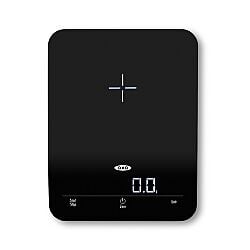
Measuring by weight works for both liquid and dry ingredients. It can be a great option for recipes that call for small amounts of spices or flavorings, because nothing gets left behind on a mixing spoon or in a prep bowl. Food scales also result in fewer utensils being used and less kitchen clean-up, since you add ingredients directly into a mixing bowl as you go. Scales are amazingly consistent too, and leave less room for error. Best of all, they make it as easy to follow recipes that list instructions in grams and kilos as recipes that use ounces and pounds— because kitchen scales can switch between the two systems with the touch of a button.
To use a scale, place your mixing bowl on the surface and then “tare” or “zero” it, which tells the scale to “forget” about the weight of the bowl and focus only on the weight of the ingredients you’re about to add. If your bowl or plate is large, use a scale with a pull-out display so you’ll be able to see the amount of each ingredient added. If the recipe calls for 4 ounces of baker’s chocolate, slowly add the chocolate until you get a 4 oz. reading on display. If it calls for 5 ounces of milk, slowly pour in the milk until you’ve reached 5 oz. Then “zero” the scale again. Keep a conversion chart (often found in the back of a cookbook near the index) on hand so you can refer to it for standard measurement translations, such as:
- 1 cup of butter = 226 grams or 8 ounces
- 1 cup of flour = 120 grams or 4.29 ounces
- 1 cup of granulated white sugar = 200 grams or 7.1 ounces

How to use cups, spoons and other tools to measure by volume
Measuring by volume, or amount, is familiar and easy. We do it all the time with measuring cups and spoons plus other essential baking tools, like cookie scoops. The trick to doing it successfully is making sure that you actually portion out the correct amount. Here’s how to do that:
How to measure liquids by volume
To get an accurate measurement of a liquid ingredient, it’s best to use equipment designed especially for the task. So:
- Use a transparent measuring cup
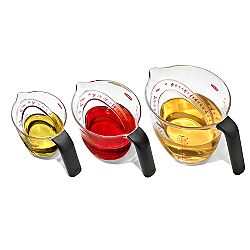
A clear measuring beaker or cup makes it easier to determine exactly when you’re approaching the desired amount of the ingredient you’re adding—and that can mean less spillage and waste. Keep in mind that printed calibrations on the side are easier to read than see-through lettering and numbers. Even better? An angled measuring cup or steel jigger that lets you read the measurements from above, so you don’t have to bend down or bring the cup to eye level to make sure you have the accurate amount in there. - Choose a container with a spout
If the liquid you’re incorporating is thin or watery, a spout will make it easy to pour it right into your mixing bowl. If you’re adding liquid to a small container or jar, a funnel can help prevent spills. Working with a thicker liquid or one that needs to be heated? A squeezable, microwave-safe silicone cup will allow you to warm up the liquid and transfer it into a mixing bowl without losing much—and a silicone spatula can help scrape any remaining liquid off the sides. For sticky ingredients like honey, syrup or peanut butter, try using an adjustable cup, which allows you to modify how much the cup can accommodate and then easily transfer all of the cup’s contents by turning a knob that pushes them into your mixing bowl. - Place your measuring cup on a flat surface
Holding a measuring cup makes it hard to get an accurate reading because the liquid contents can slosh around. Instead, start by using an angled measuring cup or angled jigger that allows you to see the measurements from above, and place it on a flat surface so the contents can settle after you pour them in. While it might seem convenient to pour your ingredients into your measuring cup while holding it over a mixing bowl, that tends to allow extra, unmeasured ingredients to fall into the mix, making it hard to know exactly how much still needs to be added.

How to measure dry ingredients by volume
How to properly measure flour
The most common way to measure flour is by spooning it into a measuring cup. Make sure it fills all the crevices and doesn’t trap air, but don’t pack it in. Instead, fill the cup to overflowing and then scrape off the top with a thin, flat knife. Again, don’t do this directly over your mixing bowl because it will add in unmeasured flour and throw off your measurements.
How to measure brown sugar and granulated sugar
Measure granulated sugar by scooping it out of its air-tight storage container and leveling it across the top of the measuring cup. For brown sugar, however, fill your measuring cup halfway, then gently pack the sugar into the cup. Repeat until the cup is full.
How to measure salt and pepper
Since most recipes call for comparatively small amounts of these ingredients, it’s best to grind your salt or pepper into a prep bowl and then use a measuring spoon to portion out what you need. Keep any surplus handy to add when adjusting the seasoning at the end.
How to measure rice
Directions for cooking rice on the stovetop or in a cooker generally call for one standard cup of rice for two to three adult servings. Use a rice measuring cup to scoop out your desired amount, then rinse and drain the rice before cooking it or adding it to your recipe.
How to measure spices
If you’re adding red pepper flakes to a homemade pizza, or dusting powdered sugar onto pancakes, using a jar with a shaker top works fantastically. But if you’re measuring spices directly into a dish you’re cooking or baking, a better approach is to spoon and level your ingredient before adding it. That’s because recently purchased spices might be more powerful than those you’ve had in the cabinet for a while, plus you never quite know how spices will react to each other. Our advice: Go slow and layer in more once you’ve taste-tested the final product.
Now that you're ready to measure, the possibilities are endless. Cooking with the kids, making specialty coffee drinks or blending smoothies… it all just gets easier!
Shop This Article
Continue Reading



Shop This Article
Loading...