
Search is currently unavailable. To use search functionality, please accept cookies in your preferences.
Popular Searches: POP Containers
How to Clean a Grill the Right Way: Tips from Oxo Experts
Set yourself up for barbecue season with a sparkling-clean grill. Here’s how to deep clean every type of grill.
24 min read
Laura Fenton
Jun 11, 2025
Whether it’s the start of grilling season or the tail-end of summer, chances are your grill is due for a cleaning. A deep degunking once every season—and an occasional spruce-up here and there—not only helps your grill last longer but leads to better-tasting food. Plus, a clean grill is more eco friendly, as excess grease and charred food increase the smoke and pollutants going into the air.
When you’re ready to clean, the right tools make all the difference, simplifying and streamlining the job. (After all, you don’t want anything standing in the way of the ultimate grilled vegetable salad.)
Read on for all the tips and must-have OXO tools to get your grill working (and looking) like new, including step-by-step guides for different types of grills and eco-safe cleaning options.
What to Know Before You Deep Clean Your Grill
We’ll walk you through all the steps of grill cleaning in detail, but here’s a quick overview of the process:
- First, know that grill cleaning can be messy, so you may want to cover your patio or deck with a dropcloth.
- Then, once you’ve gathered your supplies, remove the grill grates and set them aside to clean. If you have a gas grill, remove the burner covers and clean those too.
- Next, clean out the insides of the grill (find the specifics for gas vs. charcoal grills below) and scrub the grill lid interior. Clean and dry the grill grates.
- To finish, wipe the exterior clean and make sure all parts are dry before returning them to the grill.
Now, here are all the nitty-gritty details to make your grill sparkle….

Grill Cleaning Tools
Whether you have a gas, charcoal, or flat-top grill, there are some common supplies you’ll use to clean. Read on for the ultimate list of grill cleaning products and tools:
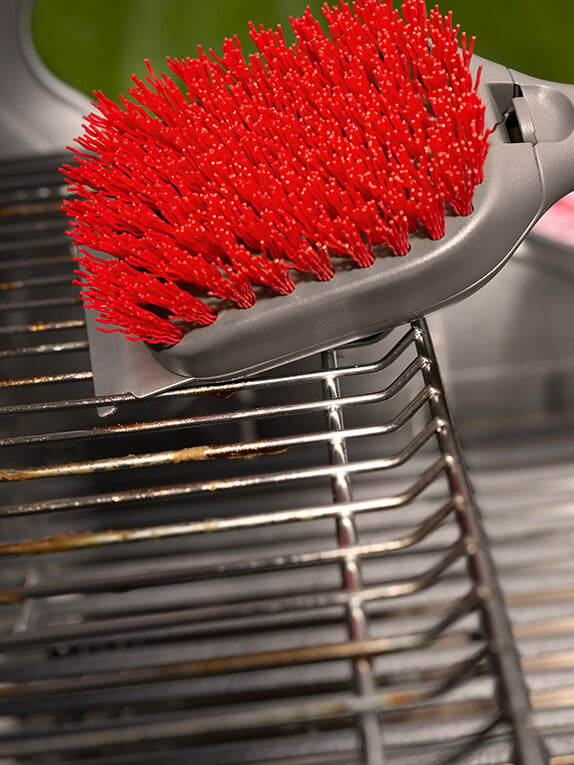
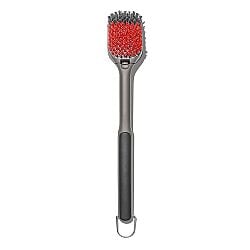
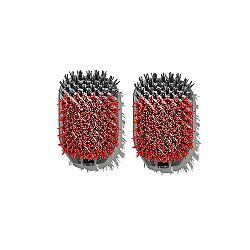
- Nylon grill brush. This is the MVP of grill cleaning. The bristles are made of durable nylon, which means you can deep clean all types of grill grates – including coated ceramic.
- Heavy-duty scrubbing sponges. If your grill is particularly dirty, you might need more than one of these, but never use a synthetic scrubber on a hot grill since it could melt.
- Steel or copper scrubber (optional). These curly metal scrubbers can come in handy for hard-to-remove gunk.
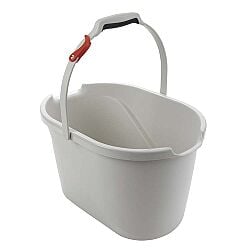
- Bucket or tub (optional). A large bucket can be useful for soaking your grates.
- Dish soap. One labeled as “degreasing” or “grease-fighting” is best.
- Baking soda (optional). You can use baking soda as a gentle, non-toxic scouring powder to boost your scrubbing power.
- Cleaning spray (optional). An all-purpose, degreasing cleaning spray or a cleanser designed for grills can come in handy for stubborn gunk. Just be sure whatever you choose is non-toxic and safe to use on a cooking surface.
- Putty knife, scraper or metal spatula (optional). A flat metal scraping tool can be used to chip off crusty bits. The tip of this nylon grill brush has a stainless steel scraper with cut-outs (to clear off burnt-on bits).
- Rags. Cut-up old towels work great. (Note: Wash these as a separate load of laundry afterwards.)
- Rubber gloves. Protect your hands during this messy cleaning job.
- Shop vacuum (optional). A shop vac can be a handy helper for removing the last bits of debris and ash.
How to Clean Every Type of Grill
Because different grills have slightly different components, the cleaning process changes a bit between gas, charcoal, flat top and pellet grills. Here’s a simple guide to getting each of them into spiffed-up, ready-to-cook condition, both inside and out.
How to Clean a Gas Grill
- Before anything else, turn off the gas source. If you use propane tanks, remove the tank entirely.
- Next, remove the grates and follow the appropriate grate-cleaning method listed below. You’ll also need to remove and clean the burner covers (aka burner hoods, the v-shaped metal plates that sit directly above the burners).
- To clean the burner covers, scrub them with your scrubber and hot, soapy water; add a little baking soda to the sponge as you scrub. (Removing any grease is important to prevent flare-ups.) Refer to your owners’ manual for the specific instructions on how to clean the burners themselves. It’s important to regularly brush these off to keep the openings clean for safety and for even heating.
- Most gas grills have a catch pan that you can pull out: Brush it off and clean with a degreasing dish soap.
- Clean inside and outside the grill. Use a shop vac to suck up any debris that may have ended up inside the grill, or use a paper towel or rag to brush any bits out of the bottom. Wipe down the grill exterior and any work spaces, as described below.

How to Clean a Charcoal Grill
- Remove the grates and follow the appropriate grate-cleaning method listed below.
- To clean out the inside, remove any charcoal you plan to use again and set it aside. Remove excess ash in the grill and empty the ash catcher.
- Next, scrub out the bowl and ash catcher with a heavy-duty scrubbing sponge and warm, soapy water. Rinse with plain water.
- Wipe down the exterior with a fresh bucket of warm, soapy water. Dry the inside and exterior thoroughly with rags.
How to Clean a Flat Top Grill
Flat top grills are more commonly found in a commercial kitchen and don’t have grates like gas and charcoal grills do.
- If your flat top has a cast iron griddle, wash it with hot water, mild dish soap and a sponge. Do not scour with abrasive tools or cleansers.
- If your flat top grill is stainless steel, you’ll want to invest in a griddle cleaning tool (usually a reusable handle with disposable pads and screens). Warm up the steel flat top, pour on warm water, then scrub, scrub, scrub with the griddle cleaning tool.
- After cleaning, use paper towels or rags to wipe off any excess liquid. When the grill is completely dry, use a paper towel or rag to coat the griddle with a thin layer of oil to create a protective layer in the grill surface.
How to Clean a Pellet Grill
- Remove the racks and clean using a grill or other abrasive brush. (Soak racks if they’re especially caked with residue.)
- Wipe down inside of grill lid with soapy water or a degreaser.
- Remove drip tray and scrape off/dump out any charred bits. Wipe off tray.
- Wipe off any grease or residue buildup on the deflector plate.
- Check vents and chimney and scrape off any buildup in or around them. You can use a degreaser on these areas as well, if needed.
- Clean off the thermometer, located inside the grill, and the grease chute that directs grease from the drip tray down into the grease bucket.
- Vacuum up or scoop out any debris that has knocked loose into your grill during cleaning.
- Wipe down exterior with a cleaner and/or degreaser. Replace all parts and you’re good to grill.

How to Clean Grill Grates
Each time you grill, scrub your grill grates as you’re cooking and while the grill is still hot. That will prevent gunk from building up and let you stretch the time between deep cleanings. Keeping the grill grates clean makes food less likely to stick, which is especially important with notoriously sticky items like grilled pizza, grilled vegetables, or grilled tofu. Plus, squeaky-clean grill grates make for the perfect char marks on your grilled burgers, steaks and barbecued chicken. But if your grates have gotten gross, here’s how to deep clean them:
How to Clean Stainless Steel Grates
Stainless steel grates are popular in part because they’re easier to clean than other types of grill grates.
- First, scrape the grates with your grill brush to remove as much caked-on food as possible. (Chefs Melissa Ben-Ishay and Tim Hollingsworth are fans of OXO’s Nylon Grill Brush for Cold Cleaning.)
- Next, if your grates are extra gunky, soak them in a bucket of hot, soapy water before scrubbing to help loosen the cooked-on food and grease. Then scrub the grates with your heavy-duty scrubbing sponge or stainless steel scrubber. Pay special attention to any places where two parts of the grate meet and grime tends to build up. Add baking soda to your sponge to boost your scouring power.
- Dry grates thoroughly before returning them to the grill.
How to Clean Cast Iron Grill Grates
Many cast iron cooking grates have a protective porcelain enameled coating on them (see below), but if you have untreated cast iron, you need to be mindful of its tendency to rust. For that reason, you’ll want to skip the soaking step; in fact, you can skip using any water at all. Instead:
- Scrape the grates thoroughly with your grill brush or a curly metal scrubber.
- Then fold a paper towel into quarters, saturate it with vegetable oil, and lightly rub the grates with the oil. (If you have a gas grill, turn on the flame to heat the oil so it forms a protective layer of seasoning.)
- If your cast iron grates are starting to rust, you’ll need a more aggressive cleaning method. You can either scrub the grates with warm, soapy water until the rust is gone or soak them in a 50/50 vinegar-water mix. Then scrub off all the rust with a heavy-duty scrubbing sponge or metal scrubber.
- Dry thoroughly before re-seasoning the grates. Instead of adding a single coat of oil, repeat the process at least twice to seal the cast iron.
How to Clean Porcelain Grill Grates
Never clean porcelain-coated grill grates when they’re hot. Once grill grates have completely cooled:
- Soak in warm, sudsy water. Use a heavy-duty synthetic scrubbing pad to remove any built-up gunk. Don’t use a metal scraper tool or a grill brush on porcelain-coated cooking grates: The metal can damage the coating.
- Wash off residue with warm, soapy water and dry with a rag.

How to Clean a Grill Without a Brush
You’ll find all sorts of grill cleaning hacks online. Some work better than others, and some are effective but come with caveats. If your grill brush has gone missing, here’s how you can still get your grill clean with household items:
How to Clean Grill Grates with Vinegar
Mix two cups of vinegar with one cup of baking soda to form a paste. Coat grill grates with paste and seal in a garbage bag overnight. Rinse off the next day.
How to Clean a Grill With an Onion
Cut a large-ish onion in half, spear it with a cooking fork, then run the cut edge over the grill grates to dislodge any food.
How to Clean a Grill with Tin Foil
If you have stainless steel grill grates or uncoated cast iron, you can use crumpled aluminum foil to scrape them clean once they’re cool enough to touch. However, do not follow any advice to lay aluminum foil over the grates, turn the grill to high and let it run: This is not safe. And make sure not to use this method on porcelain-coated cast iron since it can chip the coating.
How to Clean Grill Exterior
The outside parts of most grills are typically a combination of stainless steel, painted steel, enameled steel, and plastic—and each should be cleaned differently.
How to Clean a Stainless-Steel Grill Exterior
The main thing you want to avoid with a stainless steel exterior is scratching the finish. Stainless steel is coated with a thin layer of chromium oxide film. Never use an abrasive cleanser or scrubber on stainless steel—even paper towels can scratch some stainless finishes. Instead use a soft cloth and a specialty stainless steel cleaner to bring the surface back to its original shine.
How to Clean Painted and Enameled Grill Exteriors
Use good old-fashioned soap and water. Fill a bucket with warm water and degreasing dish soap, and wipe the exterior with rags or a cellulose sponge. After wiping the surfaces with the soapy water, rinse them with plain water, and dry thoroughly with a clean rag.
How to Clean Plastic Parts of a Grill
Any plastic bits on a grill can be cleaned with soap and water or a non-toxic all-purpose cleaner. Gas grill knobs can often be removed for deep cleaning.
How to Protect and Maintain Your Grill
A little elbow grease at the beginning or ending of grilling season—and touch ups in between cooking sessions—will keep your food delicious and your grill going strong. Follow these tips.
How to Make Your Grill Last Longer
- Invest in a grill cover to prevent rust and protect your grill from the elements.
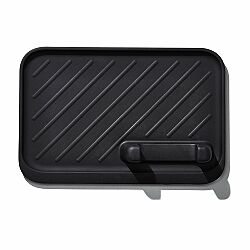
- A grilling tool rest will go a long way towards keeping your work surfaces clean.
- Another way to keep your workspace clean is to use a mise-en-place method (in which you prep and organize all of your ingredients beforehand), then carry your food and tools to the grill on a baking sheet or with this Grilling Prep and Carry System.
- If you move your grill around a lot, you should also check its nuts and bolts to see if they need tightening.
How to Clean the Inside of a Grill Lid
You may notice something that looks like peeling paint on the inside of your gas grill’s lid. Don’t panic: It’s actually a residue of grease and carbon that starts to peel off over time. The peeling residue is not toxic, but you still don’t want it flaking onto your food. To clean the lid, simply scrub off the peeling bits with your grill brush; then scrub with your heavy-duty sponge, soap and water. Dry thoroughly.

How To Keep a Grill Clean After Use
- For all grills: Once you’ve removed food from the grill, use your grill brush to scrape the grates clean while the grill is still hot. Address any spills on the work surface on the side of the grill with warm, soapy water. Wash your grilling equipment after each use—dishwasher-safe barbecue tools make that easy—and store those items indoors. If you forget to clean the grates after cooking, all is not lost: Before you start cooking, turn the grill burner(s) to high, then brush the hot grates with your bristle-free grill brush.
- For a gas grill: Check the grease pan after each use. An overfilled grease pan will result in a serious mess. If your grill manufacturer has disposable trays for the grease pan, use them. Anytime you see the grease approaching the top, simply let it harden and then throw the whole thing away.
- For a charcoal grill: Never put water onto the ashes in a charcoal grill. Instead, close the vents and lid and let the fire extinguish naturally. Once the grill has completely cooled, remove the excess ash.
Extra Credit Grill Cleaning Tips
You’ve got the basics down. These last bits of advice are the bonus section, getting you through any rust troubles, as well as how to take care of your grilling accessories.
How to Clean a Rusty Grill
If you see signs of rust anywhere on your grill, take action immediately to remove the rust before it spreads. But don’t use a commercial rust remover, which can leave a chemical residue on the grill. Try scrubbing rusty areas on the interior with a heavy-duty scrubbing sponge and soapy water. For stainless exteriors, stick to a stainless steel cleaner designed for grills.
How to Clean a Grill Brush
Don’t forget to clean your grill brush: Regular cleaning removes food caught between the bristles and prevents bacteria from forming. The easiest way to clean a grill brush is with another grill brush. Submerge both brushes in a bucket of hot, soapy water and then rub the brushes against one another. Allow them to dry thoroughly. If your grill brush is rusty or losing bristles, it’s time to replace it: Grill brushes usually need to be replaced every year, if not more frequently.
How to Clean a Cast Iron Grill Pan
If you’re grilling inside on a cast iron griddle, wait until the pan has cooled enough to safely handle it. (If there are lots of charred-on bits, you can add a little water to the pan while it’s still hot and scrape at the grill ridges with a metal spatula.) Scrape and rinse off any pieces of food. Next, fill the pan with warm water and just a couple of drops of dish soap. Use a cast iron pan brush to scrub away the greasy residue. Rinse and dry thoroughly before storing.
Conclusion
A clean grill is a happy grill, serving up all your seasonal favorites in the tastiest ways possible and lasting for many a skewer to come (psst, chef Kwame Onwuachi is a fan of OXO’s skewers). Maintaining your grill also reduces its environmental impact, minimizing smoke and pollutants.
Fine tune your cleaning methods depending on which type of grill you have, and remember that eco-friendly strategies will often work just as well as those involving chemicals. It’s also important to have the right tools. Check out OXO’s grill brushes and other outdoor gear to stock up on supplies. Get inspiration from our grilling guides and marinating tricks.
Additional reporting by Holly Hays.
Shop This Article
Continue Reading




Shop This Article
Loading...