
Search is currently unavailable. To use search functionality, please accept cookies in your preferences.
Popular Searches: POP Containers
How to Properly Sanitize and Store Your Cutting Board
Cutting boards can harbor all kinds of icky germs. Here, stress-free ways to keep them clean.
8 min read

Erica Zazo
Jun 13, 2023
Odds are, you’ve probably looked at your cutting board at some point and asked, Is this really clean? Whether you’ve used it to season raw fish or meat, dice veggies, or slice bread, you’re not alone if you’re wondering whether you’ve done a thorough enough job to keep bacteria at bay. Your concern is well warranted: As useful as cutting boards are, they also can harbor plenty of germs, which can lead to cross contamination. And that’s the last thing you want to worry about when you’re prepping your next meal. Here’s how to clean and sanitize your cutting boards before and after each use and how to properly store them when you’re out of the kitchen.
Best Material For Cutting Boards For Different Tasks
Cutting boards tend to come in different materials: wood, plastic, marble, glass or pyroceramic. And while you may be choosing your cutting boards based on aesthetics alone, there’s more to consider. The United States Department of Agriculture (USDA(Opens in a new window)) recommends using a cutting board made out of a nonporous material like plastic to slice raw meat or chicken. Although you don’t have to avoid wood entirely if you’re cutting poultry or meat, you do need to take extra steps to ensure your wood cutting board is clean before and after chopping. Wood is porous and that means bacteria can seep into grooves of the wood and stay there.
That said, plastic can still harbor bacteria, so don’t skimp on giving your plastic cutting boards a thorough scrub. It’s usually best to have one designated cutting board for meats, poultry, and seafood and another one for fruits, vegetables, and herbs. While you still need to clean all boards, this helps lower the risk of spreading possible contamination from raw foods even more.

How to Clean Any Cutting Board: What You’ll Need
- Dish soap
- Hot water
- Clean dish towel or paper towels
- Unscented, liquid chlorine bleach
- A clean sponge or a brush
How to Clean Your Cutting Board
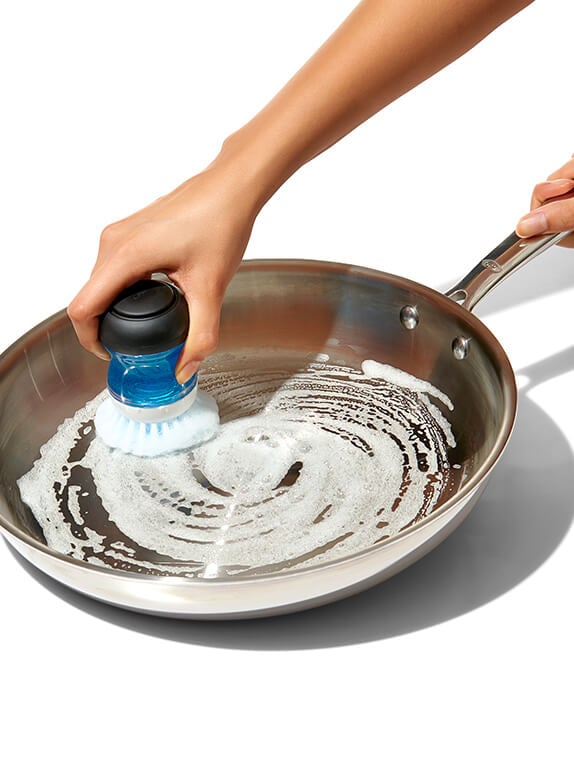
Most plastic cutting boards and some wood cutting boards are dishwasher safe, which will make cleaning a breeze. (Check your board’s cleaning instructions to be sure.) If your board isn’t dishwasher safe, clean the cutting board using hot, soapy water. Regular dish soap will do the trick. Be sure to use a clean sponge to wash the board. After scrubbing the board with the soapy mixture, rinse it with clean water. Allow the board to either air dry or pat it dry with a clean dish towel or a paper towel. After you’ve washed the cutting board, place the dirty sponge in the dishwasher to clean it too.
One thing to keep in mind: There are different types of wood cutting boards. Hard or solid wood cutting boards are your best bet. Softer woods like cypress should be avoided. Although softer woods don’t tend to dull kitchen knives as quickly, they do develop more grooves, which can harbor bacteria. Bamboo is a good choice recommended by the USDA. Bamboo is a harder wood that resists scarring from knives and is less porous. Bamboo cutting boards can also be cleaned with hot, soapy water. Once dry, use a mineral oil to help the bamboo retain its moisture.
- Can You Put a Wooden Cutting Board in The Dishwasher?
Yes, but there’s one major caveat: Only solid wood and certain types of plastic cutting boards can be placed in the dishwasher. Laminated wood cutting boards are more likely to crack. If you’re unsure if your wood is solid or not, be sure to check with the manufacturer and follow its instructions for proper cleaning. (Plastic cutting boards are dishwasher safe, too.) - How to Get Odors Out of a Cutting Board
If your cutting board has started to harbor some smells from food or herbs (onion and garlic are chief suspects here), there are two products you can use to help get the odor out: baking soda or lemon. If you’re using baking soda, make a paste using equal parts water and baking soda. Let that sit on the board for a few minutes and then completely rinse it off with clean water. (If the smell still lingers, you also can try adding a teaspoon of white vinegar to the baking soda paste.)
If you’re using fresh lemon, slice the lemon in half and rub the cut half over the board’s surface. You can also sprinkle salt on the lemon to create a scrub for a deeper clean.

How to Sanitize Your Cutting Board
Generally speaking, it’s a good idea to sanitize a cutting board after you’ve used it to cut raw meat. To sanitize a wood or plastic cutting board, mix one gallon of water with one tablespoon of unscented, liquid chlorine bleach. Take the cleaning solution and pour it over the cutting board while in the sink so it covers the surface completely. Allow the solution to sit on the board for a few minutes. Next, rinse the board with clean water. Let the board air dry or use paper towels to pat dry.
After you’ve used this solution, it’s a good idea to clean your kitchen sink to ensure all traces of the bleach are removed.
How to Store a Cutting Board
After you’ve cleaned or sanitized a cutting board, be sure to let it dry completely before storing. Moisture allows bacteria to thrive, and that can sabotage your cleaning efforts. To prevent moisture buildup, be sure to store dry cutting boards in a dry place. It’s also advisable to store cutting boards upright and to separate them if you have multiples to further minimize the chances of bacterial growth.
When to Replace a Cutting Board
If your board has developed grooves over time (from the effects of chopping) that make it tough to clean or if the board simply looks worn out, it’s probably time to purchase a new one. Remember: They aren’t meant to last forever.
Now that you’ve mastered cleaning your cutting boards, it might be a good time to deep clean the rest of your kitchen and your appliances too. Then, create a simple cleaning habit that you can keep up as you cook.
Shop This Article
Continue Reading



Shop This Article
-
 $20.99
 -
 $27.99
 -
 $14.99
 -
 $9.99
$9.99
Loading...