
Search is currently unavailable. To use search functionality, please accept cookies in your preferences.
Popular Searches: POP Containers
How to Use a Meat Thermometer for Perfectly Cooked Meals Every Time
Here's how to get the best results when using a meat thermometer to take the temperature on steak, beef, chicken, and more.
8 min read
Heather Ramsdell
Jun 05, 2025
When it comes to cooking meat, there are many methods for guessing whether it’s done. You can touch it, pay attention to the cooking time, and peek at the inside color. But the best way to know your meat is perfectly and safely cooked? A meat thermometer. (Which is why meat thermometers also make excellent gifts.)
Whether you're grilling juicy steaks and burgers or roasting a turkey for a holiday feast, read on to learn how to properly use a meat thermometer, from understanding how it works to making sure foods are cooked to the right temperature.

Why Use a Meat Thermometer?
It only takes one overcooked burger or dried-out chicken breast to understand the importance of cooking food to the right temperature. It’s a matter of flavor, absolutely. Food cooked too hot for too long will lose its juices and tenderness. It’s also a matter of safety. Undercooked food can be dangerous with too cool temperatures failing to kill off potentially harmful foodborne bacteria.
Enlist the help of a meat thermometer, however, and know within seconds when foods are safe and done to your liking. Prefer your burger medium rare?At 125 degrees, you’re good to go. Roasting a chicken? At 165 degrees, carve and serve.
Plus, you’ll ease hosting stress when you know your main menu items will be cooked perfectly every time. Here’s everything you need to know to master your meat thermometer.
How to Use a Meat Thermometer: Tips, Techniques, and Must-Have OXO Tools
How to Use a Meat Thermometer
Start taking your food’s temperature a little before it reaches the end of its cooking time to avoid overcooking. To measure, follow these steps:
- Insert thermometer into thickest part of fish or meat (for more specifics, see below). The outside of what you are cooking is very hot. Meat is coolest inside its thickest part, so that’s where to get the most accurate temperature reading.
- Pay attention to thermometer depth. Insert thermometer up to a few inches, depending on the thickness of your meat. (See below for more about different thermometers.)
- Check reading. An instant-read thermometer will deliver results within seconds. For larger portions/cuts of meat, measure in a few spots to ensure even cooking.
- Remove food from heat and let rest. Foods keep cooking even after they’re off the heat, so take items off the grill/stove/out of the oven when they’re 5 to 10 degrees cooler than your goal temperature. Let rest for 5 to 10 minutes (you can test again to be sure they’ve reached your target).
How to Use a Meat Thermometer for Beef, Pork, and Lamb
For meats such as ribs or a rack of lamb, check in the center portion, away from bones or gristle. The same goes for pork chops and bone-in steaks. Measure roasts in the thickest part. For burgers, insert thermometer into the burger’s side, angling towards the center of the patty.
Temperature Guidelines(Opens in a new window):
- Rare: 125 to 130 degrees F*
- Medium rare: 135 degrees F*
- Medium: 140 degrees F*
- Medium well: 145 degrees F
- Well done: 160 to 180 degrees F
*(not recommended by USDA because of foodborne illness)

How to Use a Meat Thermometer for Chicken
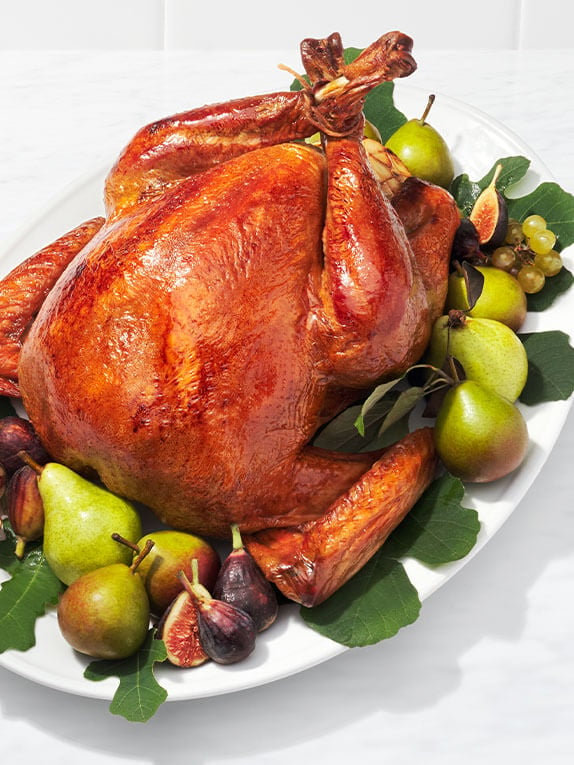
For roast chicken and turkey, check in three different places to get the best reading: Pierce the inside of the thigh and wing, avoiding the bone, and the thickest part of the breast.
Temperature Guideline: 160 degrees F
How to Use a Meat Thermometer for Fish
Measure fish fillets similar to burgers, inserting thermometer along the side at the thickest part of the fish.
Temperature Guideline: 145 degrees F
Common Mistakes When Using a Meat Thermometer
For the most reliable readings, avoid these common thermometer missteps:
- Touching bone, fat, or gristle when measuring. These areas will have a different temperature reading than the meat.
- Measuring a too-thin part of meat. Thinner cuts heat more quickly, so their temperatures won’t accurately reflect the rest of the food. Instead, insert thermometer into the thickest part of the food.
- Overcooking food. As mentioned above, even after you stop cooking food, its internal temperature keeps rising. So don’t let your steak/fish/burger stay on the grill until it reaches peak temperature; remove it when it’s a few degrees too cool to avoid drying out. As food rests, it’ll climb up to your ideal temperature.
Tips for Accurate Temperature Readings
- Take multiple readings. This especially goes for larger portions of poultry and meats, such as roasts or whole birds.
- Place thermometer in thickest part of steak/fillet/cut. Avoid bone.
- Wait for thermometer to stabilize. It can take five to 10 seconds for a meat thermometer to register the most accurate results.

Types of Meat Thermometers: Which One is Right for You?
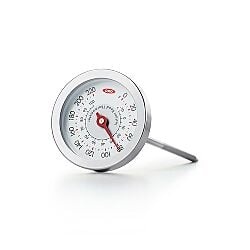
There are a couple different types of meat thermometers: instant-read thermometers and leave-in probe thermometers. Your menu can help you decide which version best fits your needs.
Instant-Read Thermometers
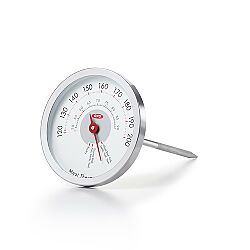
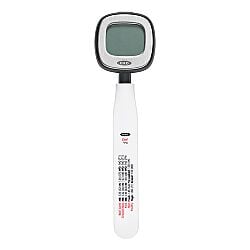
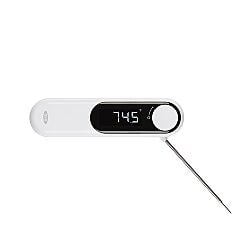
Instant-read thermometers let you know the temperature of your food within seconds. They’re especially helpful for quicker cooking, easy-to-access foods (cooked on a stovetop or grill), such as chops, burgers, and fish.
Leave-In Probe Thermometers
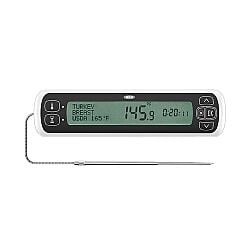
Leave-in thermometers work well with foods cooked longer in the oven, like roast chickens or tenderloins. With OXO’s Precision Digital Leave In Thermometer, insert the probe into the meat. Thread the thin stainless steel wire through the oven or grill door and rest the thermometer display on a nearby surface. You’ll be able to monitor food’s cooking temperatures without opening the oven. Plus, an alarm lets you know if your item gets hotter than desired.
Conclusion
A meat thermometer makes it so much easier to cook confidently. Grill burgers to order and ensure items reach safe temperatures with readings that happen within seconds—the tool is the host’s best friend. Before your next BBQ or holiday get together, double check that your meat thermometer is good to go or shop OXO’s options!
Shop This Article
Continue Reading


Shop This Article
Loading...