
Search is currently unavailable. To use search functionality, please accept cookies in your preferences.
Popular Searches: POP Containers
Basics of Home Cooking 101: 9 Skills and Techniques for Beginners
Have you mastered all of these essential cooking techniques? Up your skills with these how to basics.
16 min read

Lisa Milbrand
Jul 07, 2024
Whether you need a crash course on cooking for beginners or just want a refresher on a few cooking techniques that you still haven't mastered, it’s always a good time to get back to the basics. Consider this your Cooking 101 class, where you’ll learn the tricks and techniques that’ll help you make every meal even better.
How to Start Cooking with No Experience
It can be pretty daunting if you’ve seldom set foot in a kitchen. But keep a few important overarching ideas in mind and you’ll be ready to step up to the stove.
- Start simple. Bake a potato. Scramble an egg. Your confidence will grow as you get comfortable with the basics.
- Read the whole recipe before you begin. It’s happened to the best of us: Mid-way through dinner prep, you discover the meat has to marinate for a day. Read ahead so you know what’s in store.
- Ask for help. What to do when the sauce seizes up? Can you use brown sugar instead of white? There’s zero shame in texting a foodie friend; they’ll be happy to share advice.
- Taste what you make. Sample as you go and you’ll start to have a sense of how different ingredients influence flavor, as well as what you do and don’t like. And these are essential chef skills.
- Give yourself permission to fail. Learning how to cook is all about trial and error and mistakes are a wonderful way to learn. So, toss the burnt cookies and get back to it.
And now, on to the nitty gritty. Here’s everything else you need to know—all the tools, tips, and strategies—to get you well on your cooking way.

#1: Stock Your Kitchen for Success
When you’re stocking a kitchen, keep in mind that more isn't always better. Sometimes all you need are a few high-quality tools that’ll work for every dish you make. For instance, you really only need three knives: a chef's knife, a serrated bread knife, and a paring knife. Here’s a good primer on how to stock your kitchen with all the cooking basics.
#2: Understand Basic Cooking Terms
When you’re learning how to cook, figuring out what to do when a recipe calls for mincing instead of chopping can be half the battle. If you're not up on all the cooking lingo, here’s what a few of the most common terms mean:
- Sear: This fast, high-temperature cooking method quickly browns the outside of a cut of meat, helping to seal in the juices,
- Sauté: A French cooking term that literally means “jump,” sautéing involves cooking your food with a little fat (such as butter or oil) at a high temperature, and stirring or even tossing the food in the pan to help keep it moving.
- Stir-fry: Stir-frying is very similar to sautéing—you just use a little more fat than you would to sauté, and you cook the food at a higher temperature. This is one of the most essential beginner cooking techniques, which you can use for veggies or for tender, quick-cooking cuts of meat like chicken breast.
- Steam: When you steam food, you put it in a basket or colander and set it over (but not in!) a pot or pan of boiling water, to allow the steam from the water to cook the ingredient. It’s a healthy way to prepare veggies like broccoli, cauliflower and green beans, and is also great for seafood like shrimp, mussels and clams.
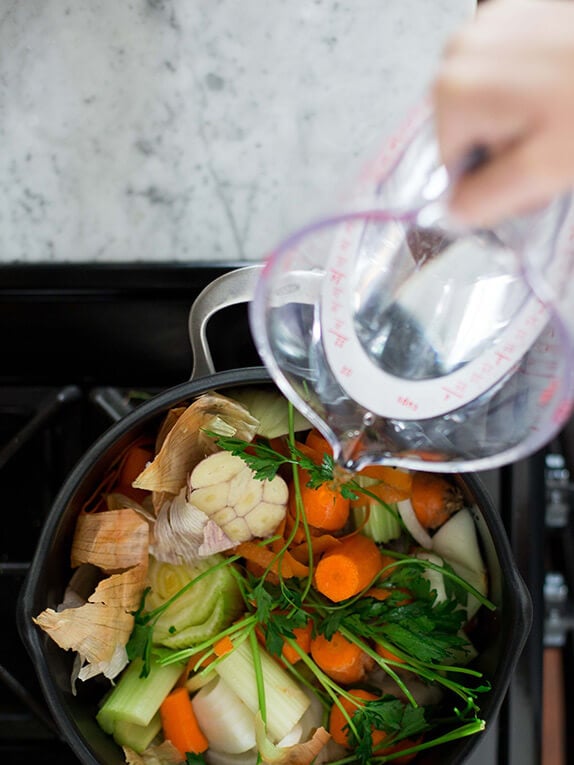
- Poach: One of the most underrated ways to cook meat and seafood is poaching. You simply bring a cooking liquid (like broth or wine) to a simmer, and let your main ingredient cook in it until it’s done. Poaching cooks the food without drying it out, so you get moist, perfect results every time. Poached meat and seafood also makes a flavorful, protein-rich ingredient to add to other dishes. Use shredded poached chicken in tacos, or poached shrimp in salads and grain bowls. Master the simple technique for poaching chicken, shrimp or salmon.
- Slice: Slicing means cutting an ingredient into thin, flat pieces, as in a slice of bread or an apple slice.
- Dice: As the name suggests, dicing is cutting food into small squares that look like dice. You can dice a vegetable into large pieces (3/4-inch square) or small (1/4-inch square).
- Mince: Mincing cuts the food into even smaller pieces than dicing—think tiny bits that would be hard to pull out of the finished dish. Recipes often call for minced garlic or onions.
- Chop: Chopping is similar to dicing and mincing food, but results in larger pieces—like the chunks of potato and carrot in a stew.
- Julienne: Also sometimes called the "matchstick" cut, this slices a vegetable into long, thin strips.
- Chiffonade: This technique is used to finely cut herbs or leafy vegetables for a dish. To chiffonade, you make a small stack of leaves, roll them into a tight cylinder, then slice thin rounds from the roll to make ribbons.
Deep dive into stovetop cooking techniques, including how to saute, fry, steam, poach and sear.

#3: Sharpen Your Knife Skills
Most recipes require at least a little slicing and dicing. If you're nervous about using kitchen knives (or get daunted watching chefs perfectly chop a butternut squash in 10 seconds flat), don't worry. With a little practice, anyone can master good cutting techniques.
The first trick is to learn the proper way to hold a chef's knife. These are the long, heavy knives that are the MVPs of the kitchen. To hold a chef’s knife properly, wrap your middle, ring and pinky finger around the handle, and pinch the top edge of the blade between your thumb and forefinger. This will give you a lot of control, especially when you’re chopping tough-to-cut items like hard squashes or meat.
For more detailed instructions on knife skills, see our guide for the best kitchen knives for different tasks.
#4: Understand the Basics: Grains and Pastas
There’s no need to master a slew of techniques for cooking every kind of grain imaginable. Here’s an easy way to cook a variety of whole grains—including farro, barley, brown rice and quinoa (which is actually a seed). The basic idea is simply to boil them—but no matter which kind of grain you’re using, there’s more to cooking it properly than simply throwing it into a pot with some water. Rinsing the grains beforehand removes excess starch, so they end up less mushy after cooking; toasting the grains gives them extra flavor.
Cooking pasta can be as simple as following the package directions for how long to boil the noodles (unless you’re using fresh homemade noodles). Still, one of the most common mistakes when cooking pasta—as well as grains—is using a pot that's too small. If you’re boiling pasta, make sure your pot gives you room to add as much water as you’ll need (you should have 4 to 6 quarts of water for every pound of pasta). For grains, you’ll need a pot that has enough room for them to expand as they cook.

#5: Master an Easy, Delicious Dinner: Roast Chicken and Veggies
Roasting can be one of the easiest (and tastiest) ways to cook just about any meat or vegetable. Just throw your ingredient of choice onto an oiled or parchment-lined pan, add your favorite spices, and pop the pan in the oven.
Fortunately, certain cooking techniques and tricks can make roasting even simpler and more delicious. For instance, roasting a chicken can take a few hours—but if you butterfly or spatchcock the chicken first (i.e. make a few cuts and flatten it), you’ll reduce the cooking time and still end up with a juicy, flavorful bird. Learn how to roast a spatchcocked chicken using this simple technique.
Love roasted veggies? You can get better results with a few key moves: Get tips on how to roast any vegetable, including faster-cooking ones like asparagus and zucchini, medium ones like broccoli and eggplant, and slower ones like potatoes and beets. If you want to perfect your squash game, find out how to peel, cut and roast butternut squash. No matter what vegetable you’re roasting, you'll be able to tell when it's ready by sticking a knife into the center of a piece. If the knife goes in easily and the edges of the vegetable are a nice golden brown, it’s done.

#6: Learn to Grill
Take advantage of this popular cooking technique even if you don’t have a backyard: Grill up a feast outdoors on a charcoal grill or indoors on a grill pan on your stove. Either way, lightly oil the grill grates, heat the grill up until it’s sizzling, then put your meat, seafood or veggies on. The heat will help caramelize the outside of your food and give you that irresistible grilled flavor.
If you're not sure when your meat is ready, the best grilling tool is a thermometer, which can tell you exactly when a steak is medium rare, or if your chicken still needs a few minutes to reach the right temperature. If you want a few more grilling basics to help you master the technique, check out these grilling tips from The Food Lab’s J. Kenji Lopez-Alt and unique grilled side dish ideas.

#7: Make the Perfect Egg
Eggs are among the most versatile ingredients in the kitchen—they’re essential for baked goods, and they can be served up dozens of different ways, from scrambled and fried to hard boiled or poached. The cooking techniques for eggs are definitely worth mastering. You can start with the basic ways to cook eggs, then get into some of the fancier options, like meringues and deviled eggs.
Hard boiling eggs to perfection is all in the timing—cook them for 11 minutes exactly, then throw them in an ice bath to stop the cooking. (You can dip them back into hot water to make peeling a little easier.)
And if you like poached eggs, you can use an egg poacher to get that silky, cloud-like effect you’ve seen in brunch dishes like Eggs Benedict.

#8: Store Leftovers Safely
When you're saving an extra serving for tomorrow's lunch, or you’ve chopped up extra veggies for the next day's dinner, you're going to need to know how to store your leftovers safely.
You might want to stock up on a few different types of containers for leftovers. Reusable silicone lids can be used with your own bowls and plates—and make a more eco-friendly and secure seal than plastic wrap. Smart Seal containers are great for packing up tomorrow’s lunch, and come in a variety of sizes. If you only used half of an onion or tomato for a recipe, save the rest for your next dish with a Cut Produce Keeper—and consider GreenSavers to help extend the life of fresh herbs and other produce.

#9: Properly Clean Your Cookware
Once you've invested in a quality cookware set, be sure to follow the proper guidelines for how to clean your pans. For instance, some of our non-stick pans can be put in the dishwasher (but certain kinds can’t, so check the specifications for each pan). In general, using a nylon dish brush will help get stubborn stains off most cookware (though you may want a specialty cast iron brush to keep those pans clean without destroying the seasoning). Taking good care of your essential cooking equipment is the best way to make it last.
Another helpful tip for new cooks to know? An organized kitchen is a much easier, fun space to work in. Here’s how to store and arrange your new pantry items so you can find what you need the moment you need it.
Additional reporting by Holly Hays.
Shop This Article
Continue Reading




Shop This Article
-
 Final $14.99
 -
 Final $120.99
 -
Non-Stick Pro 2 Piece Sheet Pan Set
Final $45.99
Loading...